Case Study · Website, Commerce & Branding · Medical Oxygen · India
"India's most trusted oxygen brand had 30 years of credibility and a digital presence that didn't show it. We rebuilt from the ground up."
Portable oxygen spans emergency medicine, high-altitude travel, sports recovery, and senior wellness. In India, the market grew sharply post-pandemic as consumers became aware of oxygen as something you could carry. Oxy99 was already there with 30 years of manufacturing credibility. The digital presence hadn't kept up.
The pandemic made oxygen a household conversation for the first time. Athletes, trekkers, seniors, travellers - a product that lived in hospital supply chains suddenly had five distinct consumer segments, each requiring different messaging and different reasons to buy.
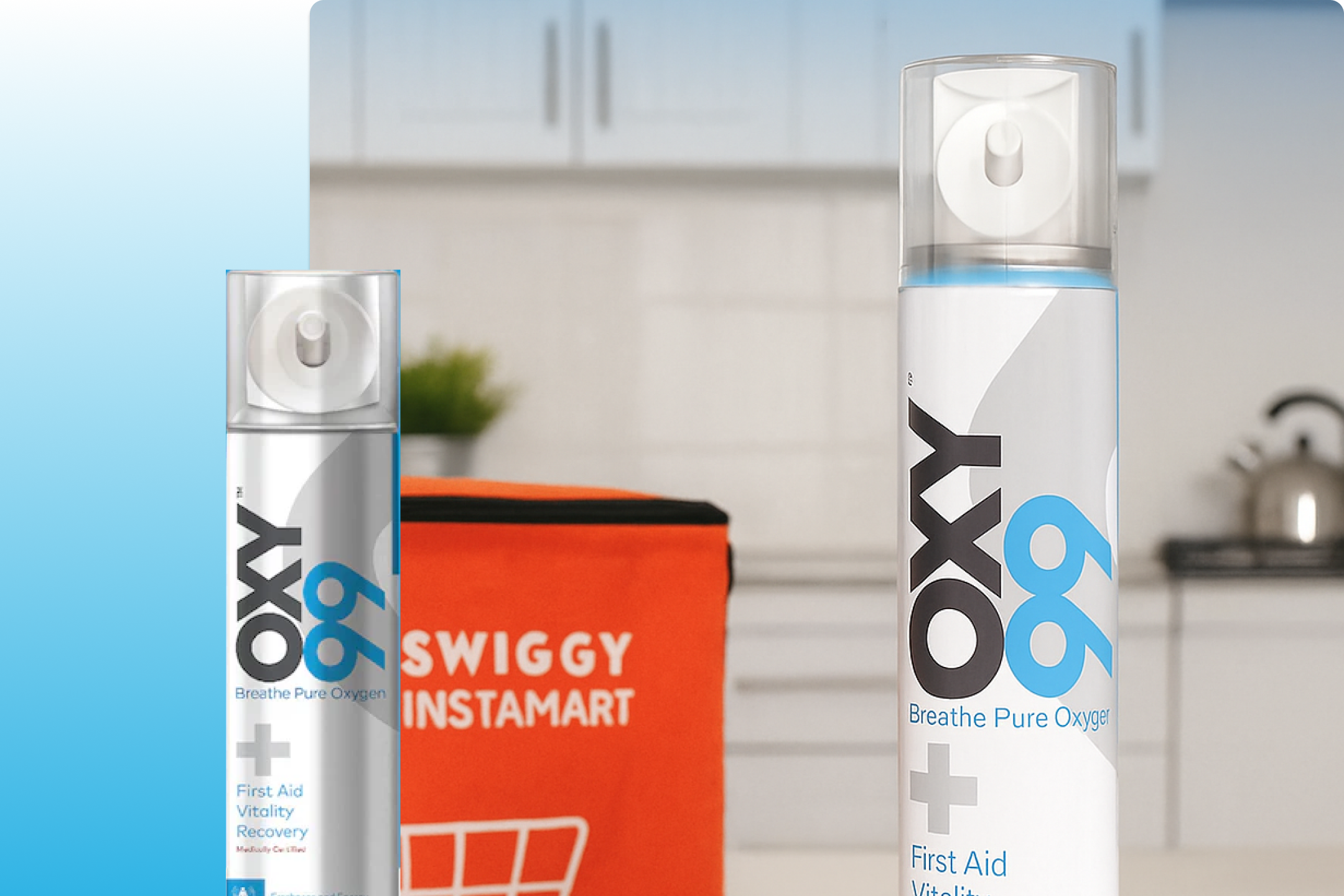
Intent to buy oxygen in a moment of need is extremely high - but purchase is abandoned if the product isn't immediately available. Integration into Swiggy Instamart placed Oxy99 in the path of high-intent consumers at the exact moment they searched, with delivery in minutes. Distribution strategy, not just brand strategy, was the growth lever.
Oxy99 came with 30+ years of manufacturing expertise, Italian process technology from ING. L & A BOSCHI, and genuine medical certification. What it lacked was a website and commercial infrastructure that communicated any of that at the moment of purchase.
We were brought in across website, performance marketing, and branding, with a brief to sharpen the digital presence first, run campaigns that put Oxy99 in front of the right people at the right moment, and redesign the packaging to carry the brand's credibility clearly.
Most brands spend years building medical credibility. Oxy99 already had it. The gap was entirely commercial: the website wasn't converting the traffic it had, and campaigns weren't targeting the moments where the product had an urgent role.
The strategy: build a site that converts, capture intent through search and last-mile distribution, then give the brand visual authority through packaging that matched its standing.
Health-adjacent products sit between two defaults: fear-based urgency marketing that leads with crisis framing, and cold clinical sterility that reads as a hospital pamphlet. Portable oxygen in particular sits in a category primed for the former - most competitors in this space lead with emergency scenarios and urgency copy.
Oxy99 had 30 years of manufacturing credibility and process technology most competitors in the category couldn't claim. Leaning on fear marketing would have put that credibility in the service of the weakest trust signal available - the same framing used by brands with nothing substantive to stand on. It would have positioned a market leader like a challenger trying to manufacture urgency it didn't need.
The bet was the opposite: rebuild the brand around the credibility that existed. Clean product architecture, authoritative packaging, and distribution through Swiggy Instamart not as an urgency play but as a friction-removal strategy for genuine, high-intent moments of need.
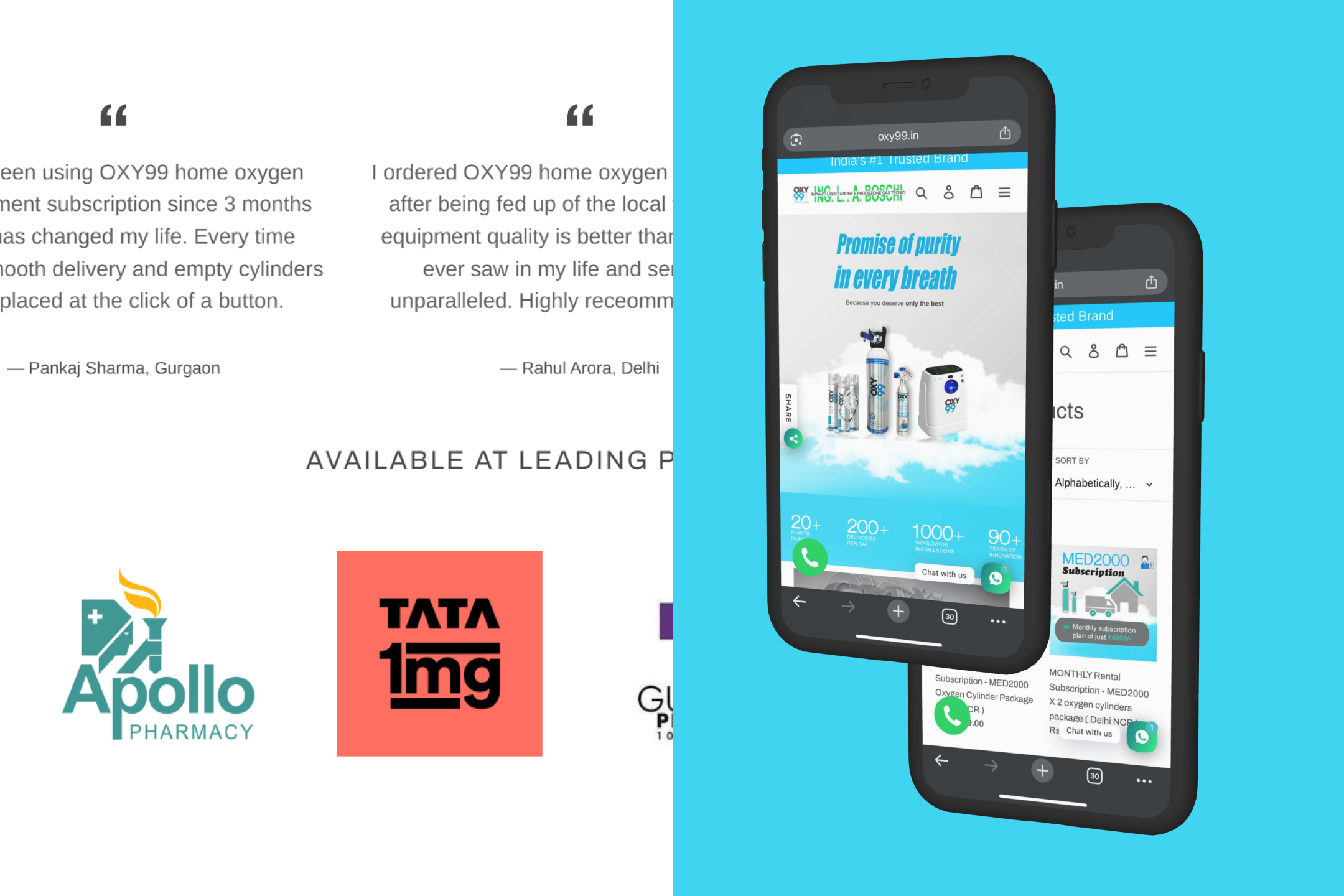
Reimagined the digital storefront to convert the traffic the brand had already earned. Clean product pages, authoritative layouts, and conversion-focused navigation, designed so someone who'd never heard of Oxy99 could understand the product, trust the brand, and buy in under two minutes.
Redesigned Oxy99's packaging to lead with what the brand actually had - 30 years of manufacturing credibility, Italian process technology, and medical certification. Clean, authoritative, and clear across four distinct consumer contexts: emergencies, altitude, sports recovery, and senior wellness. The can now communicates the brand's standing before anyone reads a single word.
India's most trusted portable oxygen brand, now with a website and brand presence that reflects the position earned through 30 years of manufacturing.
Google Ads and Swiggy Instamart working in parallel: search intent captured at the top, last-mile convenience closing at the bottom.
Emergency oxygen, available in the time it takes to make a cup of tea. Distribution as a brand promise, not just a logistics footnote.