Case Study · Shopify, UI/UX & Campaign Photography · Heritage Bags · India

Koodai
Kind.
Shopify UI/UX Design Campaign Photography Art Direction Brand Identity
Visit Site ↗

"The koodai was never not cool. It was just invisible to the people who decide what's cool. We changed who was looking."

0 Nostalgia references in the campaign. Not a single one.
Elle India called the koodai "global fashion's latest fascination": Nov 2025
Born On roadside verandahs. Built for rooftops, markets, offices: now.
Live koodaikind.com: Shopify storefront, UI/UX, campaign photography

The Field.

What the culture told us

The koodai, wire-woven, plastic-tape, made on verandahs across Tamil Nadu, was never designed. It was just made. By women who needed something durable, light, packable, and functional. It solved a problem so well that it became ubiquitous. Then it disappeared from cultural view, not because it stopped being good, but because "good" and "cool" stopped overlapping for a generation.

01 The koodai didn't need reinventing. It needed reframing.

Elle India, 2025: "the koodai's rise isn't just about fashion rediscovering a bag - it's about design coming full circle." A new generation of Indian consumers, confident in their own cultural references and sceptical of Western validation, started picking it up not as nostalgia but as a genuine preference. The design brief wasn't to make the koodai feel new. It was to make it feel inevitable.

02 Every brand doing "Indian craft" was making the same mistake: leading with the past.

The dominant narrative in the Indian heritage craft space was guilt-and-pride: buy this because artisans need saving, because traditions are dying. Deeply patronising: to the craft, to the buyer, and to the object. The koodai doesn't need charity. It needs confidence. It just needed a brand brave enough to show it without apology.

03 Indian subcultural objects are entering the global style conversation on their own terms.

Prada's 2024 market bags reminded Indian journalists of koodais - not the other way around. Indian design objects were no longer chasing Western validation; they were arriving as originals in a market hungry for the genuinely new. The timing for a koodai brand that didn't hedge its position, that didn't qualify itself with "but it's traditional", couldn't have been better.

The Brief

Make the koodai a contemporary object. Not a cultural artefact.

Koodai Kind came with a clear instinct: the bag is bold, functional, and modern, and most brands in the space were burying it under nostalgia. Wire-woven, spill-resistant, lightweight, made with artistry. These are design credentials. The brief was to build a storefront and campaign around those credentials, without once leaning on the heritage angle as a selling point.

The deliverables were Shopify build, UI/UX, and campaign photography. But the real task was simpler: make the koodai as shoppable and desirable as any contemporary product. No market scenes. No artisan close-ups. The bag going where people actually go, and belonging there.

The Insight

Heritage is a fact, not a pitch.

The koodai's heritage doesn't need announcing. It's visible in every weave. What it doesn't need is being used as a reason to buy it. That framing positions the bag as an act of charity or preservation, not a genuine choice. It implies the object needs defending.

The Koodai Kind position was the opposite: the bag stands on its own. It's beautiful because of how it's made, functional because of what it does, and desirable because of how it's worn. Heritage is the foundation - not the headline. Once you stop leading with the past, the product sells itself.

The bag doesn't
need the story.
The story needs
the bag.
The Luxury Calculus

Heritage without the sepia filter.

Indian heritage craft brands share a visual shorthand: sepia warmth, texture-heavy backgrounds, artisan hands in close-up, serif fonts that carry the weight of "old." This shorthand is immediately legible to a certain buyer. To a younger, design-literate buyer, it reads as a signal that the product requires justification to purchase - that the heritage is the reason to buy, not the object itself.

We built the Koodai Kind campaign without that framing. No market backdrops, no cultural context-setting, no provenance storytelling in the foreground. The koodai photographed as it deserves to be photographed: in the places and with the confidence of any genuinely desirable contemporary product. The craft is visible in every weave. It doesn't need announcing.

The risk: some buyers specifically want the heritage story as part of what they're purchasing. We decided the object was strong enough to earn desire without it.

We didn't sell the history.
We sold the hands
that made it, and let
the work speak present tense.

The Work.

03 Deliverables
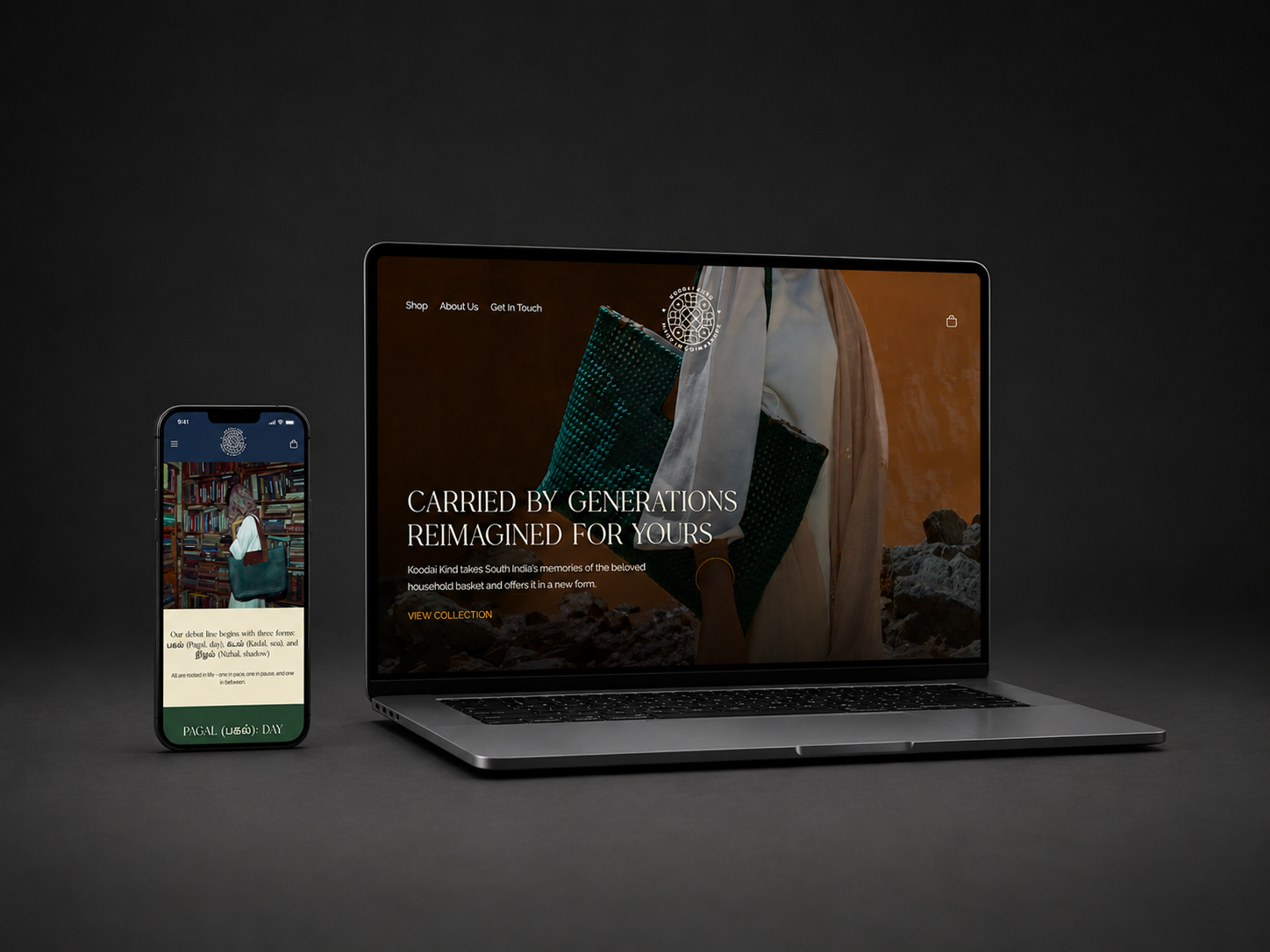
Koodai Kind Shopify storefront on desktop and mobile
01

The Storefront

Built a storefront that matched the confidence of the campaign. No craft-market aesthetic, no earthy-toned heritage signalling. Clean, editorial, direct - the same visual language you'd bring to any genuinely desirable product. Product pages led with how the bag looks in use, with material and functional detail secondary. The spill-resistant inner lining and wire-woven structure positioned as design features, not craft footnotes.

Shopify Development Product Architecture CRO Mobile Commerce
View Storefront →
02

UI/UX: Designed for the Product

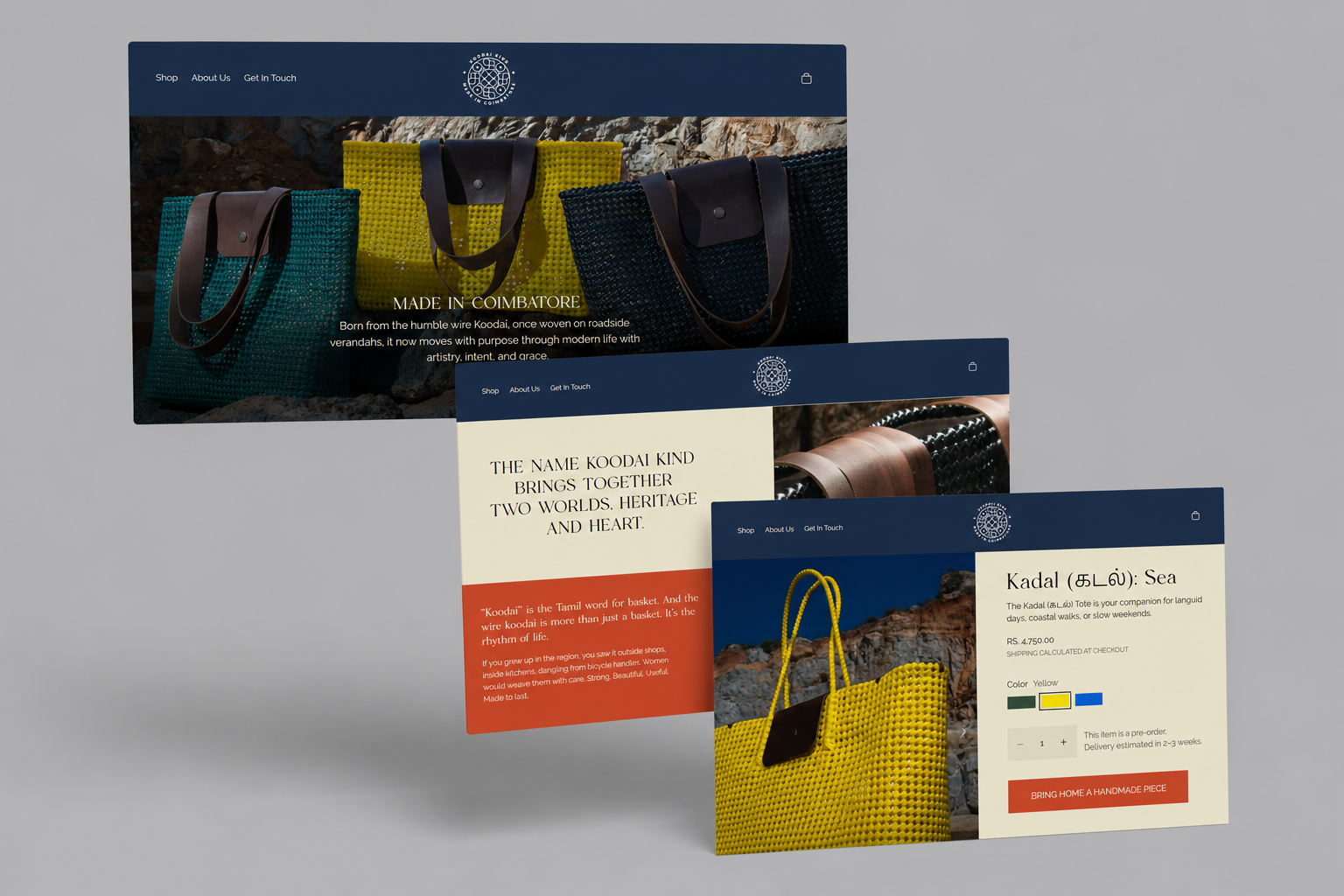
The product itself is the best thing on every page, so we built a UI that got out of the way and let it lead. Colour selector designed around the vibrancy of the weaves. Photography in context, not on white. Feature callouts that positioned wire construction and spill-resistant lining as engineering, not craft curiosities. Mobile-first, because the person buying a koodai in 2024 is discovering it on their phone.

The founder came in with one reference outside the brief: S.H. Raza's Bindu. Not a visual reference - a philosophical one. Raza spent four decades painting the bindu, the Sanskrit point of origin - a single concentrated dot from which all form radiates outward. The koodai is made the same way. Every weave starts at a knot. The bag emerges from that point. We built the bindu into the site as a page loader: a dot expanding into concentric rings before the storefront reveals. Presence before commerce. The first thing you feel on koodaikind.com carries the same register as the object itself.
UI/UX Design Mobile-First Product Experience Colour System Motion Design
Koodai Kind UI/UX design across desktop and mobile
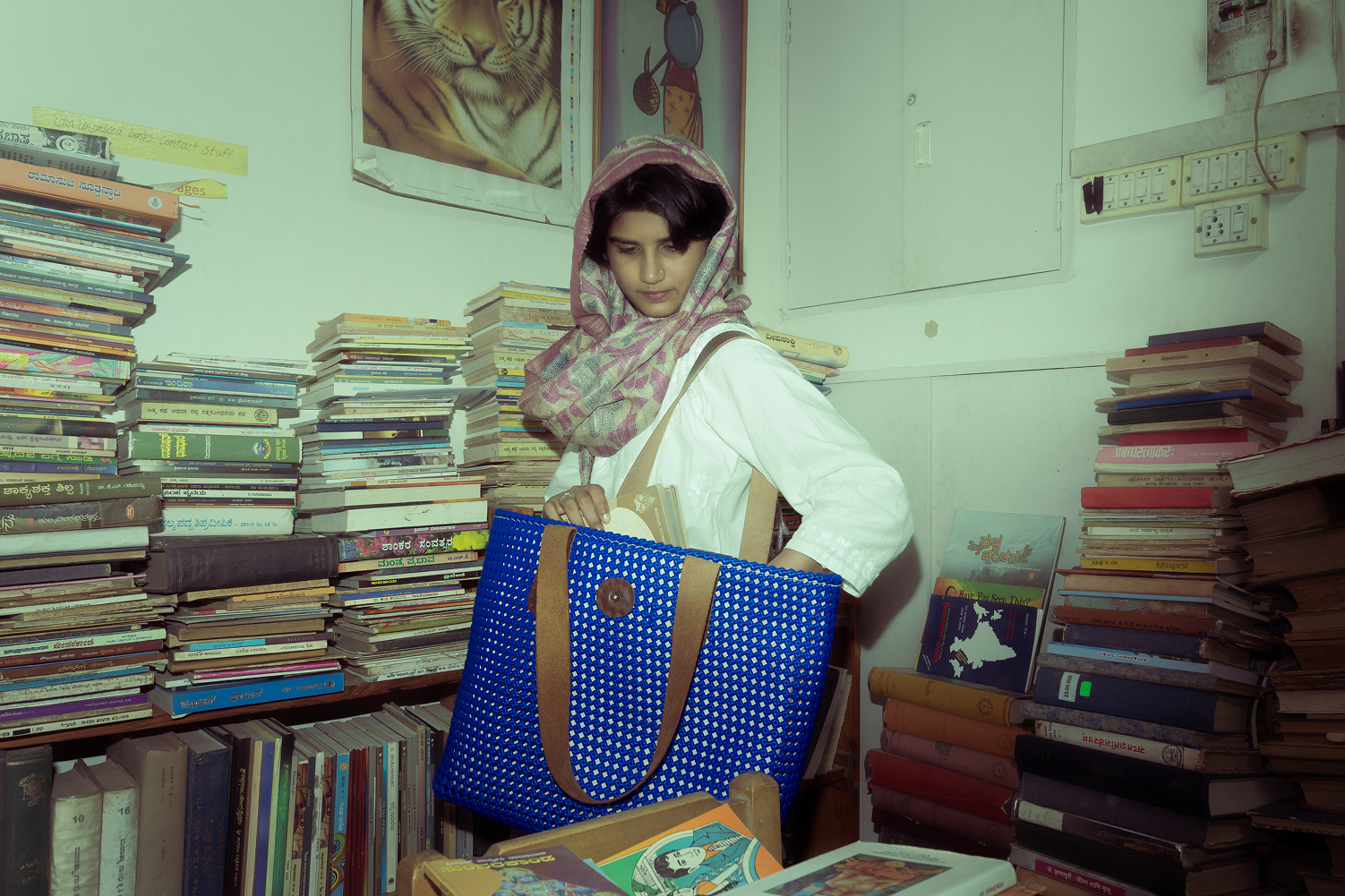
Koodai Kind campaign photography
03

Campaign Photography & Art Direction

Shot the koodai the way you'd shoot anything genuinely worth looking at - no market backdrops, no artisan hands, no soft-focus nostalgia. Contemporary settings. Real movement. The bag going where people actually go and belonging there. The colour palette drew from the bags themselves - the vibrant woven stripes that are already bold and already modern. Art direction that let the object speak without putting words in its mouth.

Campaign Photography Art Direction Visual Identity Colour Direction

The Result.

Live Full Shopify storefront and campaign

koodaikind.com, built, shot, and launched. A complete commercial presence for a product that was ready for one long before the brand was.

Now A contemporary object, not a cultural relic

Koodai Kind sits in a different conversation than every other brand in the space. Not because it rejected the heritage, but because it never made the heritage the point.

Next Indian subcultural objects, on their own terms

Koodai Kind opened a line of thinking - Indian everyday objects that are bold, functional, and contemporary, not in spite of where they come from, but because of it.

Next Case Study

Zeroed Out

A brand built from nothing. The name is the idea.

View Case Study →